
Four FutureNeuro Researchers Awarded Over €1.4 Million in HRB Funding
Four FutureNeuro researchers have been awarded funding under the Health Research Board’s (HRB) Investigator-Led Projects (ILP) 2026 scheme, announced today.
Prof David Cotter, Dr Cristina Reschke, Prof Tobias Engel and Dr Gary Brennan will each lead a four-year project, with combined funding of over €1.4 million, as part of a wider €12 million HRB investment in health research across Ireland.
The awards highlight the breadth of research underway at FutureNeuro; from understanding recovery from psychosis and exploring the role of circadian rhythms in epilepsy, to investigating more precise approaches to targeting brain inflammation and developing a new treatment for a rare childhood epilepsy. Each project also reflects a hallmark of FutureNeuro’s approach: bringing together scientists, clinicians and people with lived experience to ensure the research addresses real-world needs.
Giving recovery from psychosis a voice
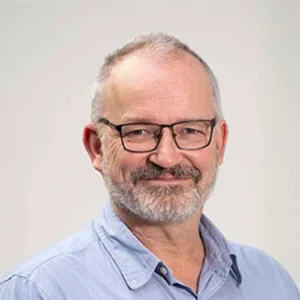
Not every project starts in the lab. Prof David Cotter’s (RCSI) project, SOLAS: Sharing Our Lived Experience through Art and Storytelling, begins with people.
Recovery from psychosis is deeply personal, yet these experiences are rarely heard beyond clinical settings. With almost €330,000 in HRB funding, Prof Cotter’s team will work alongside people with lived experience, family members, clinicians and creative partners to co-produce arts-based resources including visual art, photography, poetry and podcasts.
These will be shared through a new digital recovery hub, designed to promote understanding, challenge stigma and support recovery-oriented mental health services in Ireland. SOLAS reflects growing recognition in Ireland of the value of co-produced research, embedding lived experience into the heart of the project from the very outset.
Prof Cotter said:
“Recovery from psychosis is so often defined by clinical outcomes alone, but the people living it have so much more to say about what recovery actually means to them. SOLAS puts those voices, and the creativity they bring, at the centre of the research. I’m delighted that the HRB is supporting a project that takes co-production so seriously.”
Understanding when we treat epilepsy, not just how

For people with epilepsy, it’s often not just the seizures themselves but their unpredictability that takes the biggest toll, limiting independence, disrupting sleep, and raising safety concerns, particularly at night. Yet mounting evidence suggests seizures are far from random: up to 90% of people with epilepsy show seizures that cluster at particular times of day. Why this happens, and how it connects to the poor sleep so common in epilepsy, is still poorly understood.
Dr Cristina Reschke’s EPI-CLOCK project at RCSI University of Medicine and Health Sciences, backed by almost €330,000 in HRB funding, will investigate how the body’s natural daily rhythms drive seizure timing and sleep disturbance in adults with drug-resistant structural epilepsy. Participants will wear sensors that track sleep, movement and light exposure, alongside EEG recordings, seizure diaries, and saliva samples that capture daily changes in biological rhythms.
Together, this data could reveal biological “time signatures” that explain when seizures are most likely to occur and why sleep is affected, helping tailor treatment to each person’s body clock, an approach known as chronotherapy.
Dr Reschke said:
“For many people living with epilepsy, seizures remain unpredictable and can have a profound impact on sleep, wellbeing and quality of life. EPI-CLOCK will explore how the body’s biological clock influences seizure timing and sleep disruption, helping us move towards more personalised approaches to epilepsy care.”
EPI-CLOCK draws on expertise across RCSI, Beaumont Hospital, Maynooth University and University Hospital Erlangen, including FutureNeuro co-applicants Prof Norman Delanty and Prof Lorna Lopez. Patient and Public Involvement is embedded throughout, with a panel established alongside Epilepsy Ireland and support from international epilepsy advocate Torie Robinson.
Targeting brain inflammation with greater precision
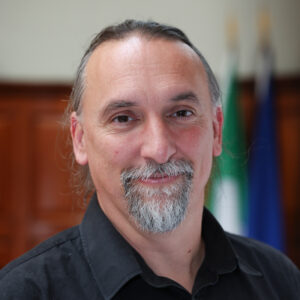
Around 30% of people with epilepsy continue to have seizures despite current anti-seizure medications. Prof Tobias Engel’s project at RCSI University of Medicine and Health Sciences, supported by almost €422,000 in HRB funding, will investigate whether targeting brain inflammation could offer a new approach to treatment.
The project will focus on P2X7R, a protein involved in the brain’s response to inflammation. Previous research in experimental models has shown that blocking P2X7R can reduce seizures. However, the protein is found on different types of brain cells, and recent findings suggest that its effects can differ depending on the cell type targeted.
Bringing together expertise in brain research, nanomedicine and drug development, Prof Engel’s team will investigate whether targeting P2X7R specifically on microglia, the brain’s immune cells, could provide a more precise approach. The aim is to determine whether this targeted strategy can reduce harmful inflammation and control seizures while minimising unwanted effects.
Prof Engel said:
“Current epilepsy medicines help control seizures, but they don’t address the disease processes that can drive them. What excites me about this project is the possibility of targeting brain inflammation with much greater precision. By focusing on the right cells, we hope to maximise the benefits of treatment while minimising side effects. This award gives us the opportunity to explore whether this approach could lead to a new treatment strategy.”
Silencing a rogue molecule to treat a rare childhood epilepsy
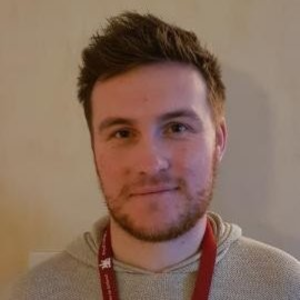
CHD2 developmental epileptic encephalopathy (CHD2-DEE) is a rare and severe childhood brain disorder. It causes seizures that rarely respond to existing drugs, along with significant developmental delay, and currently has no cure. Dr Gary Brennan‘s project at University College Dublin, supported by over €329,000 in HRB funding, will investigate a potential new treatment that targets the underlying disease rather than just the symptoms.
The team will grow tiny lab-based models of the brain, called mini brains, from skin cells donated by patients. Because these mini brains carry the same DNA as the people they come from, they provide a more accurate picture of the disease than earlier methods. Early work already points to a molecule called microRNA-134, which appears to be overactive in CHD2-DEE and may be driving the disease’s underlying changes.
The project will test whether blocking microRNA-134 can correct abnormal brain activity in the mini brains. The team will also study patient blood samples for markers that could help improve understanding and diagnosis of the condition.
Dr Brennan said:
“Children with CHD2-DEE and their families currently have very limited treatment options, because we’ve lacked models that truly reflect the human condition. This project allows us to use patient-derived mini brains to get to the root of the condition and test a treatment designed to target it, rather than simply control the seizures. I’m grateful to the HRB for supporting research that could open a real path towards a disease-modifying treatment for these children.”
Congratulations to Prof Cotter, Dr Reschke, Prof Engel, Dr Brennan and all their collaborators. We look forward to following these projects as they develop over the next four years, and to seeing where this research leads.