
Three Years On: How Time in the Clinic Is Shaping FutureNeuro’s Research
This November marks three years since the FutureNeuro Researcher Clinic Visit Programme began at the Epilepsy Outpatient Clinic at Beaumont Hospital. Since then, almost 40 researchers from across FutureNeuro have sat in on epilepsy clinics, observed multidisciplinary teams at work, and heard directly from patients and families. Those working with patient data, biological samples, or imaging rarely get that kind of access.
The programme began with a question Prof Norman Delanty kept returning to: what might researchers learn if they could see, first-hand, what living with epilepsy looks like beyond the laboratory?
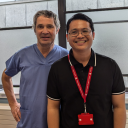
Reflecting on the programme, Prof Delanty said:
“Clinicians and scientists interested in patients with challenging and complex epilepsy want fundamentally the same thing – the optimum care of patients and families. I have always been concerned that clinicians and scientists work in parallel universes, rather than understanding more fully what each other does. Over the last three years, my colleagues and I have had 35 basic and translational research scientists visit and observe at our epilepsy clinic on Tuesday mornings at Beaumont Hospital. I think this has given them an insight into the complex medical and psychosocial challenges that patients and families experience and overcome. It gives them a more holistic picture of the lived experience of epilepsy and related disorders”
What researchers say
To mark the anniversary, FutureNeuro reviewed the reflections of participants, completed after each visit. The strongest finding: clinical exposure changes researchers’ relationships with their own research.
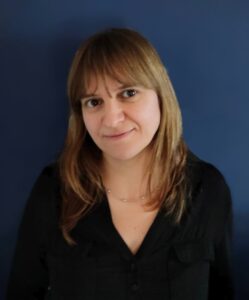
A recurring shift is from thinking about epilepsy as a scientific problem to seeing the people living with it. For Senior Research Associate Dr Elena Langa, meeting patients face-to-face provided an alternative perspective:
“I usually work with plasma samples, unaware of the personal stories behind them.” Meeting the people whose lives we aim to change gave my research new depth. Without a doubt, I’d do it again!”
Researchers also came face to face with the complexity of clinical reality: patients managing three or more anti-seizure medications, side effects that can matter as much to someone’s life as seizure control itself, diagnostic uncertainty, and treatment trade-offs. For those developing new technologies, seeing that diversity first-hand was a reminder that no single solution fits every patient, and it pushes their thinking towards more personalised approaches.
Several described patients and families as a source of knowledge in their own right, “the real experts in living with the condition.” That reframing is helping build stronger links between FutureNeuro’s work and patient and public involvement (PPI) in research design.
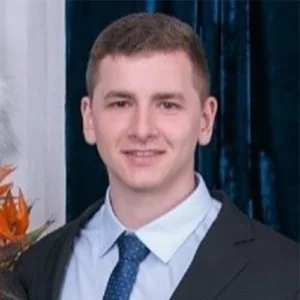
Running through nearly every reflection was something harder to quantify: renewed motivation. One researcher admitted that work can feel “slightly inconsequential” without regular contact with patients, but that meeting them made the potential impact of the research real again. FutureNeuro PhD Candidate Rafael Cipolat added:
“Seeing the impact of epilepsy research on real lives deepened my commitment to contributing meaningfully to healthcare advancements, no matter how small.”
It’s a sentiment that sits alongside FutureNeuro’s wider “Why We Do Research” initiative, which creates space for researchers to reconnect with the purpose behind their work.
When clinical insight shapes technology
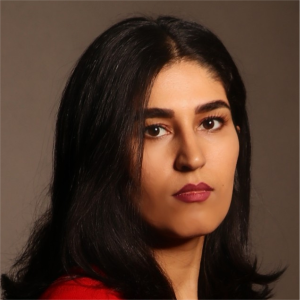
One standout example is FutureNeuro PhD researcher Shokofeh Anari, based at the University of Galway, who spent two days in the Beaumont clinic earlier this year. Her research focuses on immersive technologies, and she was developing an early Meta Quest Pro prototype to explore how virtual reality could help clinicians interact with complex patient information. In the clinic, she observed consultations and saw how electronic patient records, EEG information, and longitudinal clinical data are accessed and interpreted day to day.
“The best healthcare technologies aren’t built by looking at clinical data alone,” she reflects. “They’re shaped by understanding how clinicians work and how patients experience care.”
She also demonstrated the prototype to Prof Delanty, who gave direct clinical feedback.
“It was a real privilege to discuss the prototype with him and receive his insightful feedback and clinical perspective,” she says. “His input has been incredibly valuable in helping me think more carefully about how this work can be shaped around genuine clinical needs and workflows.”
That feedback has fed into ClinicalSphereXR, which has now reached its first development stage. The idea is easy to picture (even if the technology behind it isn’t): a clinician puts on a headset and steps into a virtual environment where a patient’s EEG recordings, clinical notes, medication history and 3D neuroimaging data sit together, rather than scattered across separate files, screens and reports.
The current focus is epilepsy, where clinicians routinely need to connect multiple complex data types to make decisions, though the longer-term vision extends to conditions such as Parkinson’s disease and Alzheimer’s disease. Prof Delanty continues as clinical supervisor on the project, helping keep the technology anchored to what clinicians actually need.
An international pilot study
The value of clinical immersion is also being recognised beyond FutureNeuro. Earlier this year, FutureNeuro researchers took part in a pilot study led by the International League Against Epilepsy (ILAE) Neurobiology Commission, published in Epilepsia Open. FutureNeuro Director Prof David Henshall and Prof Delanty are among the authors, and three FutureNeuro postdoctoral researchers (Dr Ifeolutembi Fashina, Dr Mona Heiland and Dr Hamidah Ghani) took part.
The study brought together 50 researchers across 21 epilepsy centres in 18 countries, each spending two weeks in clinical settings: shadowing specialists, attending clinics, observing diagnostic procedures, and learning from healthcare teams and people living with epilepsy. Participants reported a stronger understanding of clinical epileptology, deeper connections with clinicians, and a clearer sense of how their research could respond to real patient needs.
Dr Hamidah Ghani reflected: “It’s a valuable reminder of the human impact behind the science and why translational research matters. It was also encouraging to see genetic testing making a real difference for patients — sometimes leading to treatment changes within months that improve seizure control and overall outcomes.”
The plan now is to repeat the pilot, with more recognition and structure for the programme.
What comes next
This year, the clinic’s usual November slots for FutureNeuro researchers are being taken up by a new group: BioInnovate Fellows. FutureNeuro has partnered with BioInnovate Ireland to bring a dedicated neurology focus to its fellowship programme, and the Fellows have begun two months embedded in clinical environments across Beaumont, the Mater and St James’s Hospitals to identify unmet needs in neurological care. It’s the same principle that underpins the Clinic Visit Programme: time spent in the clinic grounds research and innovation in real need.
None of this would be possible without the clinicians who open their consultations to researchers and Fellows alongside their own patient care. Their generosity is what makes the model work.