
Finding Answers Through Genetic Testing: Sonya’s Story
National DNA Day is a celebration of discovery — from the revelation of DNA’s double helix structure in 1953 to the completion of the Human Genome Project in 2003. But beyond the science, it’s about the real impact genetics can have on people’s lives.
For Barry and Mary O’Brien, understanding the genetic cause of their daughter Sonya’s condition has brought the clarity they had long been seeking.

Early challenges and unanswered questions
Sonya O’Brien was born in 1981, “a perfect baby,” says her father, Barry. But in the weeks that followed, their concerns began to grow.
“Mary was concerned that Sonya was getting sick after her food and not bearing weight as she should,” Barry recalls.
Over the years, they sought help from multiple GPs, consultants, and paediatricians. Muscle biopsies sent to London showed some fibre damage, but the underlying cause of her symptoms remained unclear. Sonya was diagnosed with epilepsy, intellectual disability, and congenital hypotonia or low muscle tone from birth.
Decades earlier, a visit to a genetic specialist in Dublin had also left the family without answers.
“The Consultant put his team around her for an hour and was unable to give us a diagnosis,” Barry recalls. “He said she was a puzzler!”
Despite the uncertainty, Sonya attended specialist educational and day services, living at home before eventually moving into residential care in Dungarvan with Carriglea Cairde Services. Barry describes her warmly:
“Sonya is physically perfect and has her mother’s good looks. She walks and is mobile; is very pleasant, has no bad behaviours, and loves her food.”
A breakthrough with genetic testing
It wasn’t until late 2024, when the family met Professor Norman Delanty, Consultant Neurologist at Beaumont Hospital and FutureNeuro Investigator, that things began to change. He adjusted Sonya’s medication, reducing her seizures by 50%, and recommended genetic testing, which finally gave the family the answers they had long been seeking.
“The tests showed she had a genetic defect in the STXBP1 gene. When we read up about it, it describes her condition to a T,” Barry explains.
While the diagnosis hasn’t changed Sonya’s day-to-day care, its significance runs deeper.
“After years of not knowing the cause of Sonya’s condition, we now have a result which is very important for us.”
Barry is emphatic about the broader value of genetic research: he strongly recommends that anyone in a similar situation seek testing, believing it could “bring results for many children” over time.
Research, registries and the road ahead
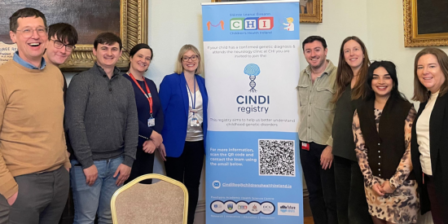
At FutureNeuro, initiatives like the Epilepsy Associated Gene Ready (EAGER) Register, led by Professor Delanty, are helping researchers better understand rare genomic epilepsies. By collecting detailed patient information — from genetic profiles to treatments and outcomes — these registries uncover patterns that can guide personalised treatment strategies and, in some cases, target the underlying genetic causes.
Programs like EAGER also allow families to contribute to research that may benefit the wider community, turning what was once a medical puzzle into a path forward.
Sonya’s story shows that while a genetic diagnosis may not immediately change care, it can provide understanding, reassurance, and hope. It also highlights how genetic research — and initiatives like EAGER — are opening new possibilities for understanding and treating rare conditions, benefiting both patients today and future generations.