
Research Explained: From Discovery to Patient Impact
Every breakthrough in neuroscience starts with a question, but understanding what they really mean, and why they matter to patients and families, isn’t always straightforward.
In this new FutureNeuro series, we delve into the emerging ideas, technologies and discoveries shaping the future of brain research. Each article explores a key scientific concept, explains the research behind it, and shows how discoveries made today could improve diagnosis, treatment and care in the years ahead.
The series has been developed in collaboration with Laura Bilbao Broch, Science & Health Writer and Clinical Neuroscientist, whose expertise helps translate complex neuroscience into engaging stories for a broad audience.
What will precision medicine mean for ALS?
Could tailoring treatment to the individual patient, rather than applying a single approach to everyone, change the outlook for a condition as unpredictable as amyotrophic lateral sclerosis (ALS)?
That question sits at the heart of precision medicine: an approach to healthcare that combines detailed information about a person — their genetics, biology, medical history, and clinical symptoms — to build a much more complete picture of how their disease develops and progresses. This helps guide decisions about diagnosis, treatment and care, rather than treating everyone with the same broad condition in the same way.
No two people living with ALS experience it in exactly the same way. Some experience rapid progression, while others live with the disease for many years. Symptoms can begin in different parts of the body, and treatments don’t always work equally well for everyone. That variation is exactly what FutureNeuro researchers are trying to address through Precision ALS, a large European research programme led by Professor Orla Hardiman. Built as a shared data platform in collaboration with the TRICALS research consortium and Trinity’s ADAPT Centre, the programme brings together many different types of information on each patient, known as multimodal data. That includes clinical details from hospital visits, genetic test results, brain imaging, and biomarkers found in blood (measurable substances that hint at what’s happening inside the body).
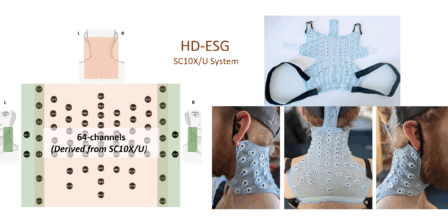
One example of this in action: Precision ALS researchers are trialling digital technologies, including wearable sensors, to track physical impairment in people with ALS between clinic appointments. Collecting real-world data on movement and function is helping to reveal subtle changes that clinic assessments alone might miss.
Making sense of such large and varied datasets is a challenge in itself, which is why FutureNeuro recently welcomed Sarah Deegan as Digital Health Innovation Lead, tasked with helping the centre get the most out of its data and digital health tools.
Why does this matter for patients?
A fuller picture of each person’s ALS allows researchers to group patients more accurately according to how their condition behaves, known as patient stratification. That makes for smarter clinical trials, where a treatment is tested in the patients most likely to respond to it. It also raises the possibility of catching warning signs earlier, and matching individual patients to the treatment or care plan best suited to them, rather than a generic one.
Precision medicine won’t produce a single cure for ALS. But it could help ensure the right treatments reach the right patients at the right time.