
Opening Doors: CINDI Registry Reaches 100 Families Milestone
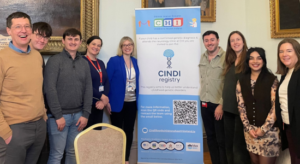
For many families, a child’s rare neurological condition brings uncertainty and a long search for answers. The Collaboration in Genomic Disorders in Ireland (CINDI) registry, which has now enrolled over 100 children and young people, is working to shorten that journey by connecting Irish families with cutting-edge research, clinical trials, and emerging treatments.
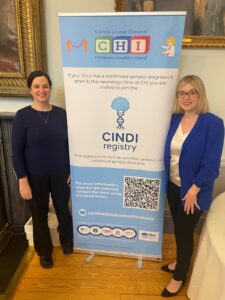
The CINDI registry was launched in 2023 by Dr Susan Byrne, FutureNeuro researcher at RCSI University of Medicine and Health Sciences and paediatric neurologist in Children’s Health Ireland (CHI), and her colleague Dr Janna Kenny, clinical geneticist at CHI. It was funded by Children’s Health Foundation through the CHI Seed Funding programme and the FutureNeuro Research Ireland Centre.
Since its launch, the registry has quickly established itself as a vital resource for families navigating neurogenetic conditions—brain conditions caused by changes in genes. The CINDI registry securely stores clinical and genetic information for children recruited through CHI, whether they have a confirmed diagnosis or remain undiagnosed despite specialist neurological and genetic testing but are strongly suspected of having a neurogenetic condition.
Dr Susan Byrne, commented:
“The CINDI research registry forms the foundation of our research programme. With informed consent the research registry securely stores clinical and genetic information for children with both diagnosed and undiagnosed neurogenetic conditions. Primarily it enables us to connect children who have a diagnosed neurogenetic conditions to clinical trials or precision therapies. It also allows us to identify children without a genetic diagnosis for advanced genomic and transcriptomic research studies.”
“We are thrilled that over 100 children and young people have now joined the registry. This milestone reflects the collaborative efforts of families, clinicians, and researchers, and demonstrates how the CINDI regsitry is helping to accelerate precision diagnosis and treatment for children with neurogenetic conditions.”
The registry’s impact is already measurable. Among the 65 children with confirmed diagnoses, 14 have received precision treatments—therapies tailored to their specific genetic makeup. Five children were identified as suitable candidates for clinical trials, while two more joined other research studies.
For the 36 families still searching for answers, CINDI has opened new avenues for investigation. The registry enabled 26 “trio exomes”— genetic tests that compare DNA from a child and both parents — to be brought back to Ireland and re-examined with fresh eyes. Another 29 advanced genetic tests not typically available through standard clinical care have been sequenced. One child has already received a new diagnosis, with plans underway to use the latest “long-read sequencing” technology for ten more patients. This is an advanced technology that reads much longer stretches of DNA than traditional methods, helping scientists detect complex genetic changes that are often not visible to standard methods.
A family member sharing their experience with CINDI, said:
“If there is an answer anywhere for my sons, it lies in further investigation and research. I have wished so hard over time to have our boys’ cases looked at in-depth for a connecting genetic issue that may lead to a less trial-and-error approach and more towards precision therapy. We know we may never have a definitive answer regarding their diagnoses, but without this golden opportunity we would never know either way.”
CINDI’s impact extends beyond individual families. The registry uses what researchers call a “silo” model—imagine separate, secure rooms where different research teams can work with the data while families maintain control over their own information. This approach has already attracted several research groups focused on neurodevelopmental conditions, creating a collaborative network that amplifies impact.

Collaboration across FutureNeuro is also driving results. Twenty transcriptome samples—which show which genes are actively working in cells—have been shared with Dr Gary Brennan’s lab at UCD for deeper analysis. The registry is also recruiting participants for Dr Cristina Reschke’s DS-Time study examining sleep patterns in developmental syndromes. Internationally, FutureNeuro’s agreements with the European rare disease network (ERDERA) mean Irish data contributes to global research efforts, giving Irish families access to a broader scientific community.
The registry is also nurturing Ireland’s next generation of genetic researchers. A medical student working on CINDI won Best Clinical Poster at the Irish Society for Human Genetics in 2024, while new fellows are joining to advance research for undiagnosed children.
CINDI exemplifies FutureNeuro’s mission to transform the patient journey for people affected by brain conditions, demonstrating how patient registries can deliver real-world change. By connecting secure data infrastructure with clinical expertise and research opportunities, the registry is turning possibilities into real outcomes for Irish families.
For more information about CINDI, contact the team at CindiReg@childrenshealthireland.ie.