
International Epilepsy Day: Spotlight on Engaged Epilepsy Research at FutureNeuro
At FutureNeuro, epilepsy research goes beyond the lab. Our teams work closely with people living with epilepsy, families, clinicians, and community partners to ensure discoveries are informed by lived experience and translated into meaningful outcomes. On International Epilepsy Day, we highlight projects that combine cutting-edge neuroscience with patient and public involvement (PPI), collaboration, and a shared commitment to improving the lives of those affected by epilepsy.
From understanding the biological drivers of seizures to developing new diagnostics and therapies, FutureNeuro investigators are tackling epilepsy from multiple angles, always keeping the patient’s journey at the centre of their work.
Preventing Epilepsy After Brain Injury: Targeting P2X7

Prof Tobias Engel is investigating how post-traumatic epilepsy (PTE) develops after traumatic brain injury (TBI) and how it might be prevented. Using experimental models, his lab has shown that blocking the P2X7 receptor, a key immune signalling molecule linked to seizures, can reduce seizure activity. This raises the possibility of treatments that prevent epilepsy from developing, rather than simply managing symptoms.
The project combines expertise in neuroinflammation, brain imaging, and patient engagement. Working with Dr David Loan, the team studies how immune cells such as microglia contribute to long-term brain damage and increased seizure risk after TBI, while Dr Jordi Llop uses advanced PET imaging to determine whether P2X7 can identify individuals at greatest risk of developing epilepsy.
A dedicated PPI panel brings together people with lived experience of TBI and epilepsy, guiding how the research is communicated and ensuring it remains grounded in real-world needs.
Co-Creating New Epilepsy Treatments: The GliaTarget Project

Building on P2X7 research, Dr Valentina Salari, a FutureNeuro NeuroAdapt MSCA Fellow, leads GliaTarget, a project developed in close partnership with people living with epilepsy. From the outset, PPI has shaped research priorities, focusing on treatments that improve quality of life, reduce long-term medication burden, and address the broader impacts of seizures.
GliaTarget is developing a microglia-selective, disease-modifying therapy targeting P2X7. Using antisense oligonucleotides delivered via engineered lipid nanoparticles, the therapy switches off P2X7 specifically in microglia, while advanced PET imaging helps identify which patients may benefit most. Engagement initiatives, including FutureNeuro’s Dragons’ Den PPI programme, continue to guide the scientific direction and communication of the research.
Designing Earlier and More Targeted Diagnostics: NeuroVolt

Dr Áine Brady, a FutureNeuro NeuroAdapt MSCA Fellow, is leading NeuroVolt, a project developing new technologies to improve the early detection and personalised treatment of neurological conditions, including epilepsy.
The project examines the structure and behaviour of proteins involved in neuroinflammation to identify new diagnostic opportunities and guide therapeutic strategies. PPI is central to NeuroVolt, with engagement activities including device design workshops and the co-creation of visual patient journeys. Researchers, patients, and the public work together to ensure the technology reflects real-world experiences and meets the needs of people affected by epilepsy.
Advancing Treatments for CDKL5 Deficiency Disorder

Dr Omar Mamad and his team at RCSI are pioneering treatments for CDKL5 Deficiency Disorder (CDD), a rare and severe genetic form of epilepsy. Current therapies are largely ineffective, but the team is developing precision RNA medicines, targeting microRNAs to correct the brain networks that cause seizures and developmental delays.
The approach is tested in advanced mouse models and, for the first time, in human cell lines derived from CDD patients, generously donated by families and collaborators in Boston. Close collaboration with the CDD community ensures the research focuses on outcomes that matter most. Events like the CDKL5 Ireland 5km run and annual family days allow families to guide and stay connected to the work. Dr Mamad’s ultimate goal is to translate these discoveries into treatments that transform lives and reduce the burden of this devastating disorder.
DS-TIME Study: Exploring Sleep and Circadian Rhythms
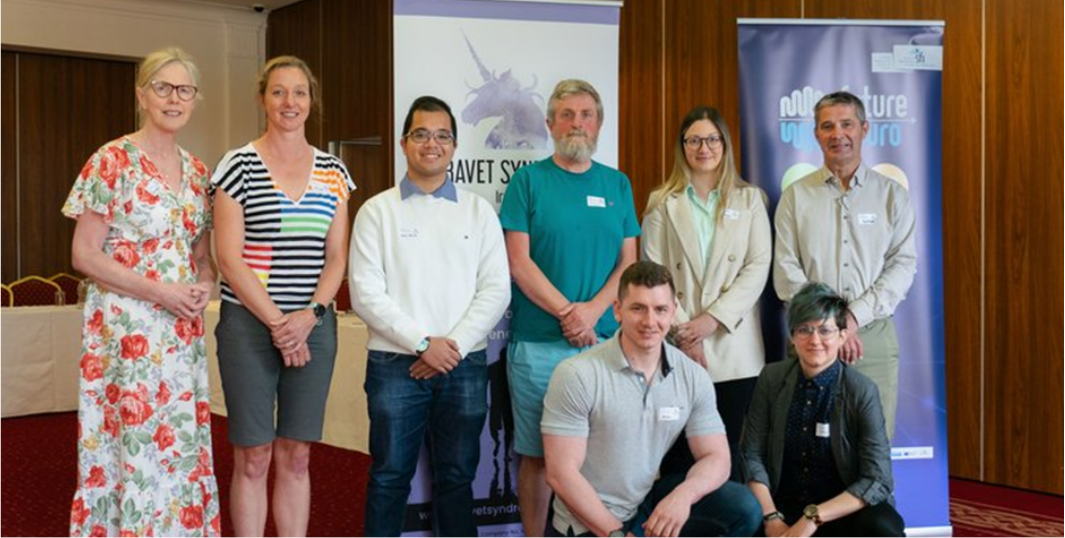
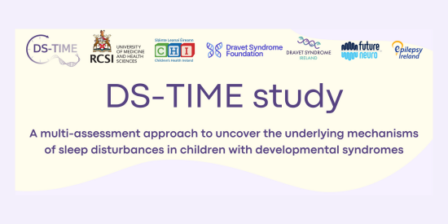
Dr Radharani Benvenutti, a Senior Postdoctoral Fellow in Dr Cristina Reschke’s lab at RCSI and FutureNeuro, is part of the DS-TIME study, which investigates sleep and circadian dysfunction in children with developmental syndromes associated with epilepsy.
The study grew directly from concerns raised by parents about their children’s significant sleep problems and the impact on family life. Nicola Kehoe, Director of Dravet Syndrome Ireland and mother of a child with Dravet syndrome, helped design a study protocol that is realistic, family-friendly, and integrates into everyday life through non-invasive, minimally distressing procedures. Dravet Syndrome Ireland has supported recruitment, study materials, and dissemination.
At PPI events, the team provides accessible information on the neurobiology of sleep, offers practical strategies for improving sleep, and communicates findings back to families. Working in true partnership with families ensures the study is designed and delivered from the perspective of patients and caregivers, keeping the goal central: improving quality of life for people with neurological conditions.
Looking Ahead
Across these projects, FutureNeuro researchers combine scientific excellence with meaningful patient engagement. By involving patients, families, and community partners at every stage, we are advancing the science of epilepsy while ensuring discoveries lead to tangible improvements in care and quality of life. On International Epilepsy Day, we celebrate this commitment to research with impact, guided by the voices of those who live with epilepsy every day.