

Background
Alzheimer’s disease is the most common cause of dementia, but it affects much more than memory. Increasing evidence suggests that changes in the brain’s electrical activity are also an important feature of the disease. Some people with Alzheimer’s disease experience seizures, while others show subclinical epileptiform activity—brief bursts of abnormal brain activity that can be detected through specialised monitoring but do not cause visible seizure symptoms.
Even when seizures are not present, Alzheimer’s disease can disrupt the normal communication between brain cells, affecting the organised patterns of activity that support processes such as learning and memory. One of the brain rhythms affected is gamma activity, a pattern of electrical signalling involved in attention, learning, and memory.
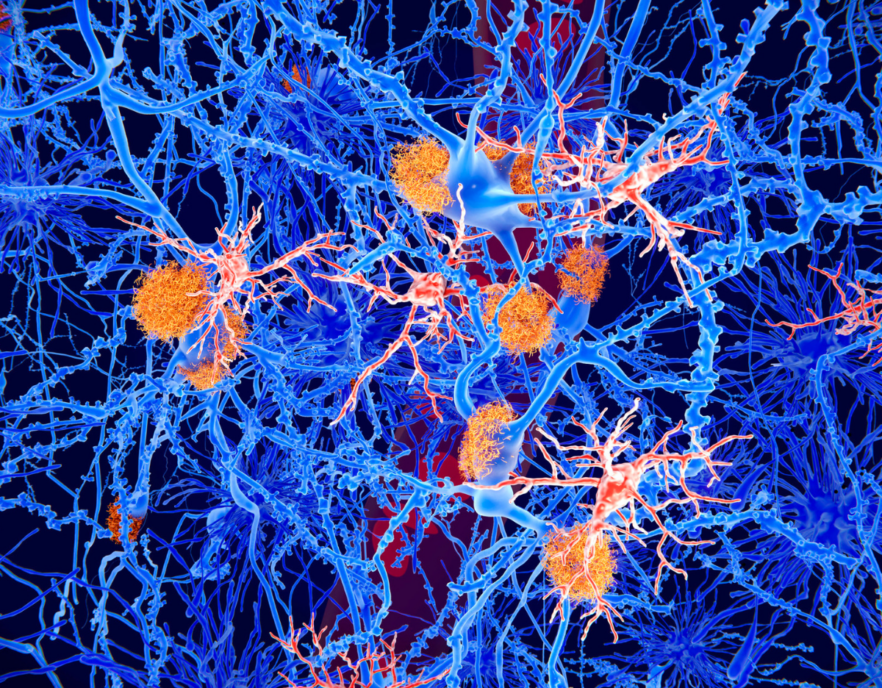
At the same time, research has highlighted the important role of microglia, the brain’s immune cells, in Alzheimer’s disease. Understanding how microglia influence neuronal excitability and brain network activity could provide important insights into how Alzheimer’s disease develops and progresses.
Research
In this recent study, Prof Mark Cunningham, working with Prof Colm Cunningham, investigated how changes in microglial function affect brain network activity in APP/PS1 mice, a commonly used model of Alzheimer’s disease.
The researchers blocked the activity of colony-stimulating factor 1 receptor (CSF1R), a protein that helps control the survival and function of microglia. They found that this increased disruption to gamma activity and made brain networks more prone to excessive activity, including the appearance of epileptiform activity.
These findings provide new evidence that changes in microglial function can contribute to the disrupted brain activity increasingly recognised as a feature of Alzheimer’s disease.
Potential impact
This study improves our understanding of how microglia help maintain healthy brain activity and how changes in these cells may contribute to cognitive decline in Alzheimer’s disease. The findings also highlight the importance of carefully evaluating treatments that target microglia, to understand how they may affect brain activity and the risk of seizure-like changes. By revealing new links between immune changes in the brain, disrupted brain signalling and epilepsy-like activity, this research could help guide the development of future treatments for Alzheimer’s disease.