
Brain Awareness Week 2026: How FutureNeuro Is Turning Research Into Real Change
For people living with epilepsy, motor neurone disease (MND/ALS), multiple sclerosis (MS), and other neurological conditions, the path from scientific discovery to better treatment can feel frustratingly slow. FutureNeuro is working to change that. This Brain Awareness Week, we’re highlighting research that is already improving care—and building the foundations for what comes next.
Precision Medicine Moves Closer to Routine Care
Imagine a blood test that could confirm an epilepsy diagnosis, pinpoint the gene involved, and guide the most effective treatment. This is the promise of precision medicine, and FutureNeuro researchers are already bringing it closer to reality.
A team led by Prof Norman Delanty integrated genomic testing into Ireland’s national epilepsy patient record system. Among 571 patients tested, 51 received a clear molecular diagnosis—answers many had sought for years.
Five patients carried changes in the DEPDC5 gene, which disrupts the mTOR pathway. This finding opened the door to treatment with everolimus, a drug already used in tuberous sclerosis. When given to patients whose seizures had resisted standard therapies, four out of five saw seizure reductions of more than 50%, and three exceeded 75%.
Building on this work, Prof Delanty and Prof Gianpiero Cavalleri are now exploring whether genetic differences can predict who will respond best to commonly used anti-seizure medications—an important step toward personalised prescribing.
Strengthening Evidence for New Epilepsy Therapies
Real-world data is essential for understanding how treatments perform outside clinical trials. A study led by Prof Delanty and Dr Pat Moloney evaluated cenobamate in people with highly treatment-resistant focal epilepsy. Their findings were recognised by The Lancet Neurology as one of the ten “Major Advances in Epilepsy Research in 2023”, underscoring Ireland’s growing leadership in the field.
Monitoring Seizures Beyond the Hospital
Long-term seizure monitoring usually requires days or weeks in hospital, connected to specialist EEG equipment. A European clinical trial—led in Ireland by Prof Delanty and Dr Daniel Costello—is evaluating EpiSight, a small implanted device from UNEEG Medical that could change this entirely by allowing continuous EEG monitoring at home.
Earlier versions detected all recorded seizures and 90% of significant abnormalities. If the new system performs similarly over months of real-world use, clinicians will gain far richer data to guide treatment.
Earlier Detection and Better Trials in MND/ALS and MS
Early diagnosis and accurate monitoring are critical in neurological disease. Led by Prof Orla Hardiman, several FutureNeuro studies are identifying biomarkers that can detect ALS earlier and track its progression.
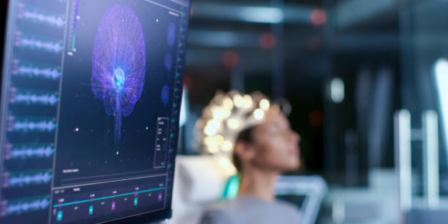
The MotorMarker study combines brainwave (EEG) and muscle (EMG) recordings to capture early biological changes, while TechnicALS, a Precision ALS project—developed in collaboration with the ADAPT Centre—uses digital tools to monitor walking, speech, swallowing, breathing, strength, and hand movement from home.
FutureNeuro is also leading major international MS trials. Prof Hugh Kearney is principal investigator for two Phase III studies at the Trinity–St James’s Clinical Research Facility, ensuring Irish patients can access cutting-edge therapeutic research.
Matching Patients to the Right Trials and Treatments
Precision medicine only works when patients can be identified and connected to the right opportunities. FutureNeuro researchers are building registries that do exactly that.
The Epilepsy Associated Gene Ready Register (EAGER), led by Prof Delanty and founded with initial seed funding from industry, collects clinical and genetic information from people with rare genetic epilepsies. It helps clinicians rapidly identify patients with specific mutations who may benefit from targeted therapies or clinical trials.
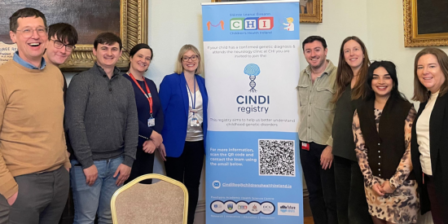
Alongside EAGER, Dr Susan Byrne and colleagues are developing CINDI, a registry for children with rare neurogenetic conditions at Children’s Health Ireland, Crumlin. More than 100 patients have been recruited; among those with confirmed diagnoses, 14 have received targeted treatments and five have been matched to clinical trials—including one child receiving a novel gene replacement therapy.
FutureNeuro aims to expand both registries through national and international collaboration.
“For undiagnosed patients who are part of CINDI, our aim is to use a multi-omics approach to eventually diagnose their condition. ” says Dr Byrne. “For this collaboration is crucial.”
From Discovery to Impact
From gene discovery to digital diagnostics and international clinical trials, FutureNeuro is building the infrastructure needed to make personalised neurology a reality. This Brain Awareness Week, we celebrate not only the science, but the patients and families whose lives it aims to transform.